More productivity with less AI spend.

I help small and medium-sized businesses get more done with AI while spending less on it. Usually that means finding where AI is wasting effort, fixing the data or the workflow, and using plain software where AI isn't needed.

30 minutes with me, not a sales team. No preparation needed.

Prefer email? [email protected]

Scott Mastin

Track record

Army Research LaboratorySensor and imagery AI testing, 2007 to 2019

How I help

Is it the model, the data or the workflow?

Find where AI is wasting effort.

Is it the model, the data or the workflow? I check each one, so the fix lands in the right place.

Fix the data first.

Most of the time the AI is reading the wrong things. I clean that up, or change how it reads them.

Fit AI to how you work.

When AI is bolted onto a job a person used to do, I rework the job around what AI does well.

Cut the AI bill.

Plain software handles the steps that don't need AI, and smaller models handle narrow tasks. Every change is tested before you rely on it.

Diagram of an AI capability that is not working. Independent testing sorts the cause into the model, the data, or the workflow. The model fix is to specialize an open model with a smaller, cheaper model tuned to your task, and then test it. The data fix, marked most common, is to trim inputs to what belongs in the product and add examples, or change how the AI reads it. The workflow fix is to redesign around what AI does well and use plain software for steps that do not need AI.
I check the model, the data and the workflow, so the fix lands in the right place.

What that looks like for a small or medium-sized business.

For a small or medium-sized business: trim what the AI reads so it is fed only what the job needs; use smaller, cheaper models tuned to your task instead of the largest general model; and automate repetitive parts, with agents on the busywork and plain software on steps that do not need AI. A side panel covers independent testing of the models, the tuned add-ons, agents, and generated code before anything ships.
Trim what the AI reads, use smaller, cheaper models tuned to your task, and use plain software where AI isn't needed. Every change is tested before you rely on it.

How the bill comes down.

Code where AI isn't needed.

Lookups, rules, math and formatting move into plain software. It gives the same answer every time, has no token cost, and runs faster.

Smaller, cheaper models tuned to your task.

A smaller, cheaper model can be tuned to your task, so it handles your work without the cost of a large general model.

Smaller models on cheaper hardware.

A smaller model can run on less expensive hardware.

Tested before it replaces anything.

Each change is checked against what you use now, so quality holds.
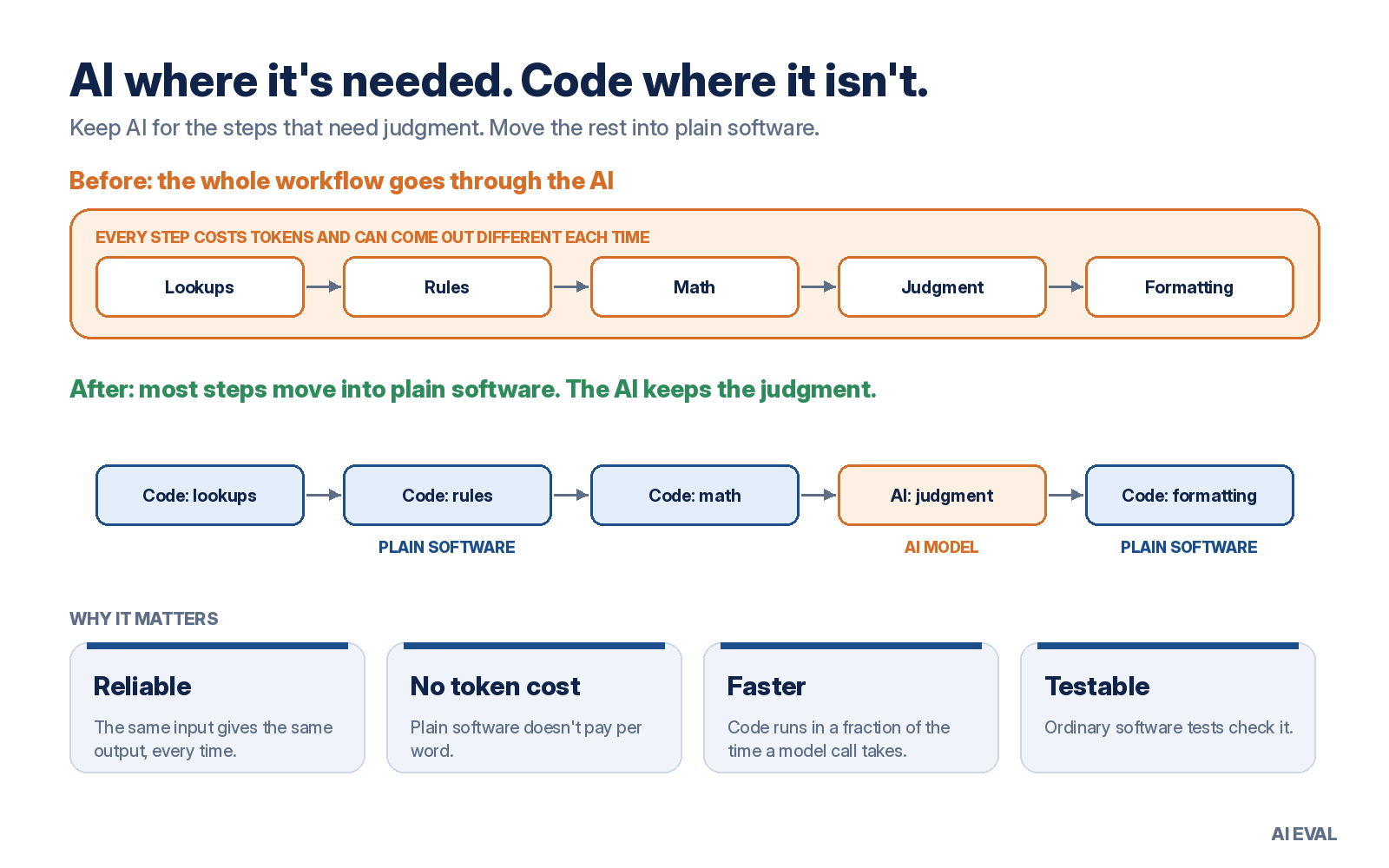
Workflow diagram. Before, lookups, rules, math, judgment, and formatting all go through the AI, and every step costs tokens and can come out different each time. After, lookups, rules, math, and formatting run as code, and the AI keeps the judgment step. Plain software has no token cost, runs faster, and can be checked with ordinary software tests. Same input, same output.
Same input, same output. Most workflows push every step through an AI model, even the steps a few lines of code could handle. Move those steps into plain software, and keep AI for the steps that need judgment. The result is cheaper, faster and easier to test.
A large model on expensive hardware, with a high cost every run, compared with a smaller open model on cheaper hardware, with a lower cost every run. Shrinking the model lets it run on less. The smaller model is tested on your task, against the original, before it replaces it.
A smaller open model can run on cheaper hardware. Before it replaces anything, it's tested against the larger model to make sure quality holds for your task.

What this looks like.

A team built an AI to write its reports. It read everything in the database, most of it unrelated, and the reports weren't usable. I cut its input to only what belongs in the report and gave it examples of a finished one. The output cleaned up, and the team started relying on it.
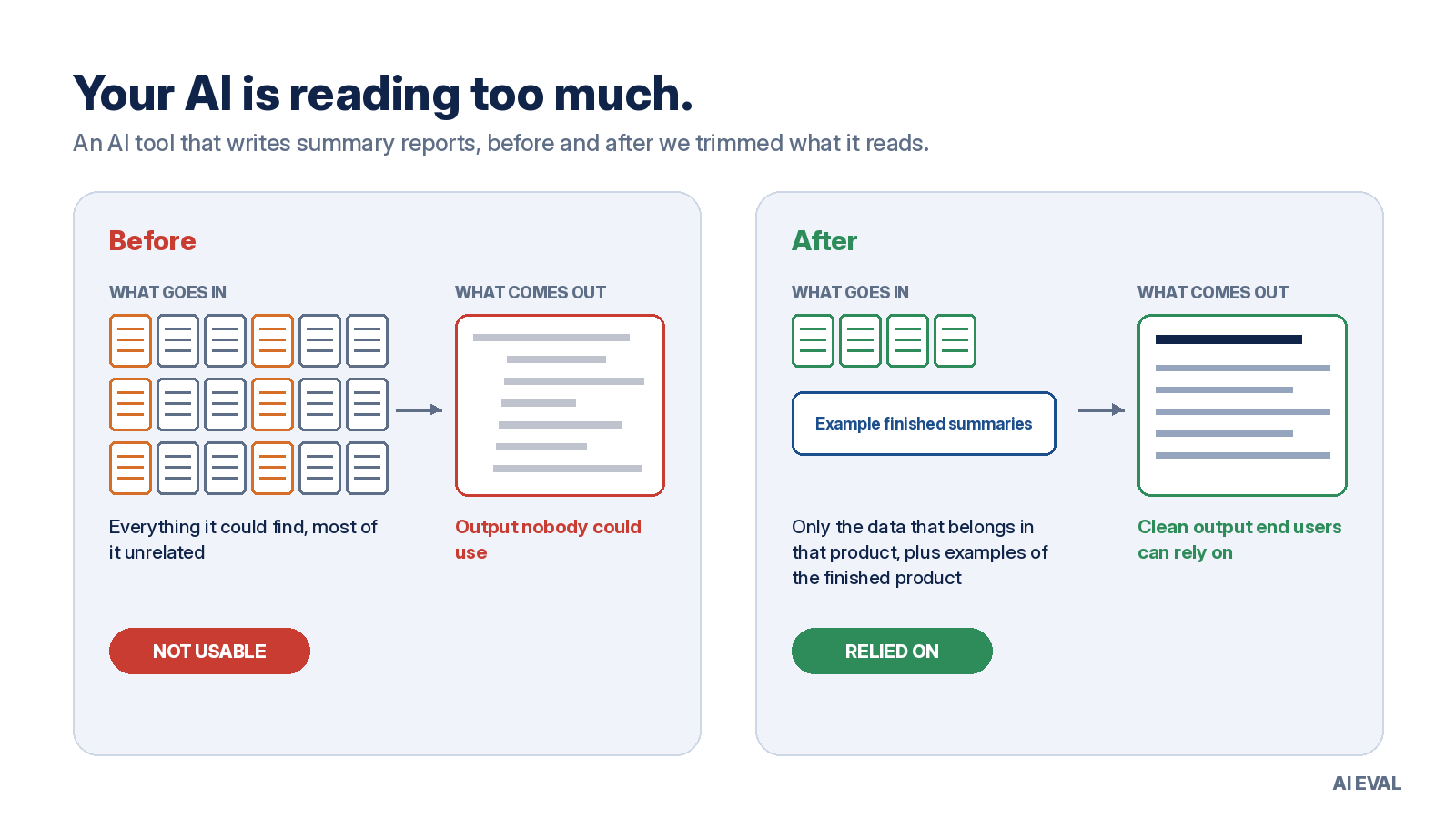
Before and after for an AI tool that writes summary reports. Before, everything it could find goes in, most of it unrelated, and the output is not usable. After, only the data that belongs in that product goes in, plus examples of the finished product, and the output is clean enough that end users can rely on it.
Before, the reports weren't usable. After, the team started relying on them.

Who this is for.

  • Small and medium-sized businesses already paying for AI tools that aren't saving the time they promised.
  • Owners watching their AI bill grow without a clear return.
  • Teams that want AI to take on repetitive work but aren't sure where to start.

How it works.

01

Talk.

30 minutes. Tell me what you want AI to do, what it's doing now, and what it costs you.

02

Find the problem.

I'll tell you where I'd look first: the model, the data or the workflow.

03

Decide together.

If it makes sense to keep going, we work out what that looks like. If it doesn't, you still leave with a clearer picture.
About

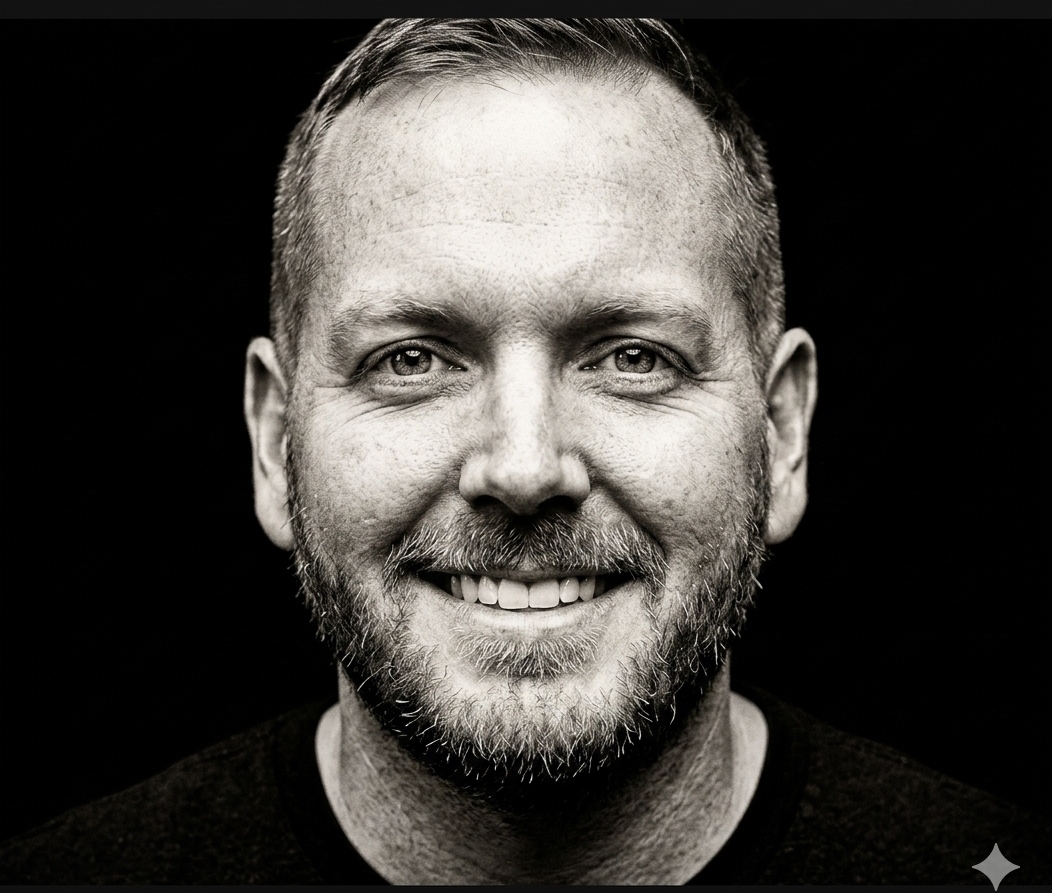
Scott Mastin

Scott Mastin

President, AI Eval Corporation

I manage AI test and evaluation programs for the Pentagon. For nearly two decades I've answered one question for senior leaders: does this AI work well enough to trust? When the answer is no, the reason is usually the data or the workflow, not the model. That's just as true in a small business.

I'm a service-disabled veteran, and I lead AI Eval Corporation, which does this work for the Department of War.

  • Army Research Laboratory. AI testing for sensor and imagery systems, 2007 to 2019.
  • Project Maven. Former AI test and evaluation program manager, 2019 to 2023.
  • OUSD(R&E) and the Chief Digital and AI Office (CDAO). I manage AI test and evaluation programs for the Pentagon, 2023 to present.
  • AI Eval Corp
  • ARL
  • SDVOSB
  • Tradewinds

AI Eval Corporation builds AI tools with test and evaluation built in. Learn more at aieval.org.

Common questions

What if I'm not sure what's wrong?

That's the usual starting point. Tell me what the AI is supposed to do and what it's doing instead, and I'll tell you where I'd look first.

Will this cut my AI bill?

Often, yes. Steps that don't need AI can run as plain software, and narrow tasks can run on smaller, cheaper models tuned to your task.

Do I need a technical team?

No. Tell me how the work gets done today, and I'll take it from there.

What does it cost?

We'll talk about that once we both know whether I can help. The first call is free.

If this sounds useful, let's talk.

Tell me what you want AI to do for your business and what it's doing now. In 30 minutes we'll know whether I can help.

Book a free 30-minute call

Prefer email? [email protected]